
Most corporate gifts are forgotten before the box is open. Branded sweets are different: they get opened, shared at the desk and photographed — and with direct food printing, a one-off order for a single client is finally worth taking.
Key takeaways
- 85% of consumers remember the advertiser behind a promotional item (ASI, 2026)
- Edible gifts win on quality first — the print rides on top of a good product
- Short, personal runs are where printing beats moulds, films and transfer sheets
- Producers like Krenc Kruszy and Basia Sweets built B2B business on exactly this
Why sweets are the gift people remember
The Advertising Specialty Institute surveyed almost 5,000 consumers in the US, Canada, Mexico and Europe for its 2026 Global Ad Impressions Study. 85% could name the company behind a promotional item they had received, and 78% said they keep such items because they are useful. A gift that is eaten is not kept for years — but it is opened immediately, shared with colleagues and talked about, which is exactly the moment a brand wants.
Market researchers estimate the global corporate-gift market at close to a trillion US dollars, with Europe at roughly a quarter of it. Estimates vary widely between reports, but every one of them lists food and confectionery among the leading gift types — and confectionery is one of the categories Europe is strongest in.
What separates a gift that lands from one that is binned
1. The sweet has to be genuinely good
A beautifully printed mediocre praline still tastes mediocre. Quality of the product comes first — chocolate that is properly tempered, cookies with a clean, flat surface, fillings that hold. The branding sits on top of that, never instead of it.
2. Design for the surface, not the screen
Logos that work on a website rarely work on a 4 cm cookie. Bold marks, good contrast and short text read well; hairline details and pale colours on dark chocolate disappear. Always send the client a printed sample instead of a screen mock-up — the real thing closes the order.
3. Make it specific and fast
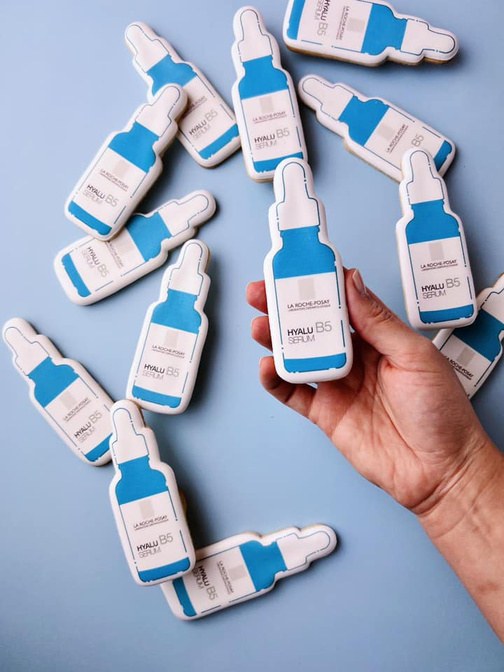
Personalisation is valuable because it can be specific: a name, an event date, a campaign line, a one-off design for a single client. With direct printing there are no plates, films or moulds to pay for, so a run of 200 pieces costs no more to set up than a run of 20,000.
4. Think past the chocolate
A gift is the sweet, the packaging and the story together. A matching box, a card, a consistent look across the set — this is what turns a cookie into something worth photographing. Packaging and print design are part of the product, not an afterthought.


What it looks like in practice
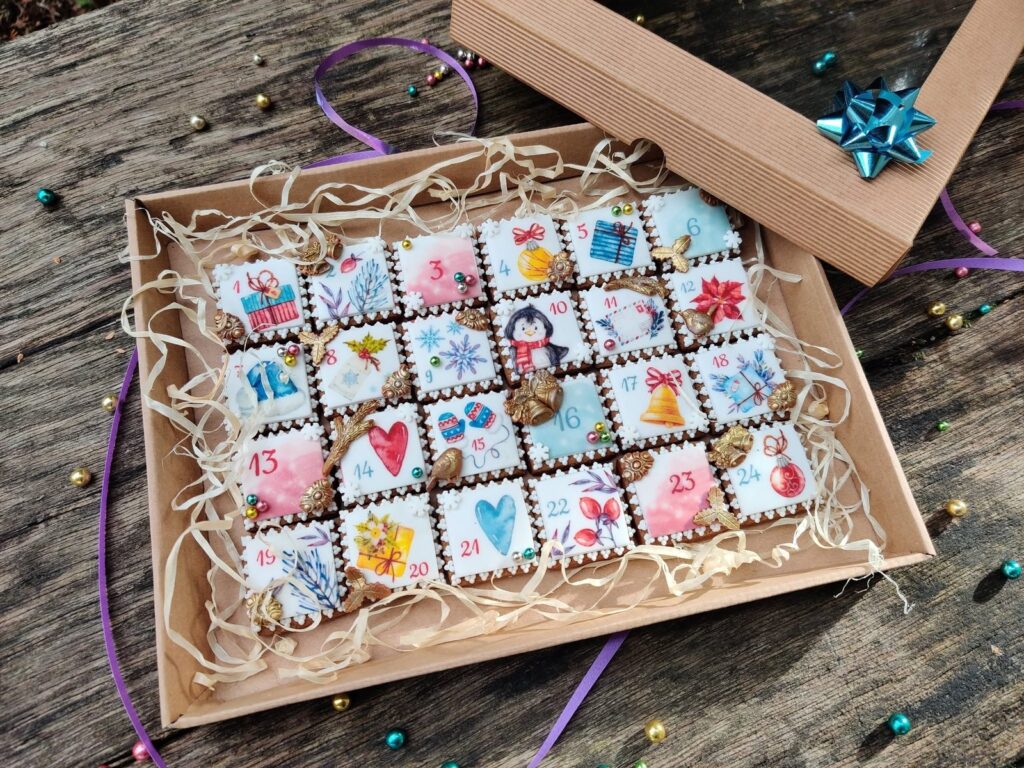
Krenc Kruszy, a small Warsaw studio, decorates cookies and gingerbread for brands such as Netflix, Swarovski, Guess and Empik. After investing in an IMAGO printer, owner Agnieszka Krenc reports around eight times more cookies per week — and a return on investment within two to three months. Read the case study.
Basia Sweets started in an apartment kitchen. Printing took over the most time-consuming part — precise lettering — and her cookies now go to major companies, ministries and embassies. Read the case study.
At industrial scale, SLODKIE in Warsaw has produced advertising sweets since 2004 and offers more than 600 products, with personalisation of packaging, form, colour and taste at the heart of its offer. Read the case study.
After three months I can finally guarantee customers mass production of personalised cakes — in brilliant print quality.
Agnieszka Krenc, Krenc Kruszy
How to price branded sweets
The economics are simple: the edible ink on a printed piece costs less than one cent, while a personalised product sells at a clear premium over the same plain piece. Use our ROI & growth calculator with your own prices and volumes to see how quickly a printer pays back.
- Quote per piece including design, so the client compares like with like
- Offer a sample box — a printed sample converts better than any PDF
- Build seasonal sets in advance: Christmas and year-end gifting is booked from September
- Add a design fee for one-off artwork, waive it for repeat orders
Want to see your client’s logo on your product?
Book a free demo — we print a sample with your own design and show you what it means for your margins.
Written by Zoran Obradović and the Printeat team. Figures from customer case studies are reported results from the companies named; market figures are cited at the end.